To Tazi

You’ve been with us for 5 years
And seriously eased our tears

With different color eyes and a patchy face
You looked like a pretty sad case

Never known kindness, warmth or love
Never sat on grass, chased a  ball, or saw the sky above

Locked in a cage
No room for rage

You stood there trembling with fear
Until the voice of sweetness came to your ear

Then with joy and playfulness you’ve grown
Into the sweetest dog I’ve known.

This Morning’s Gem

Monday morning, I’m unlocking my office door after being gone for a long weekend. A patient, is leaving his therapist’s office, walking down the hall towards me.

“Dr. Kumar, Dr. Kumar, I have something to tell you: Relax! … By the way, that’s what they said to Anne Boleyn right before they cut off her head!”

He kept walking, rounding the corner to leave the building.

“Is he trying to tell me something?” I say out loud.

“Maybe you’re going to get the axe!” a colleague said, who happened to be walking by.

The patient came back.

“Dr. Kumar, I have something to ask you that I’ve always wanted to know. Not that I’ve lost sleep over it or anything, but I think you may know the answer. Tell me: where does it hurt, when you get guillotined? In the neck? Head? Or in the body?”
“I don’t think there’s time to feel pain,” I said. “Once the spinal cord is severed it’s over.”

“Oh, of course!” he said. “That makes sense. I’m so glad I asked you. What a relief.”

What I didn’t say, but that occurred to me later, is that this is why one would need to relax. If you’re tense the blade could have trouble cutting through the muscle and executioner may need a couple of tries.

-2/23/2016

My Box

In my box goes many things
Like wishes, dreams and bits that bring
Many joys & sorrows; disbelief & wonder
About flowers and people and the cause of thunder.
I keep it by my bed at night
To hold my fears and tears and fight
To get a restful sleep for today
Without the nagging thoughts that play
Around my mind and tease my head
And won’t let me drift off when I’m in bed
Then in the morning I start afresh..
-March 13, 2013

Where were were you on 9/11?

NYC Skyline pre-9/11

It was a crystal clear beautiful early Autumn day.  The traffic to work that day was good but very backed up heading into the city.  I was working on a Deaf inpatient ward in a psychiatric hospital in New Jersey.  Everyone was late that day for some reason and no one showed up to morning rounds.  As I walked through the day room the patients said that a plane had somehow flown into the tower and was on fire.  I remember something like that happening when I lived in LA and watched as the second plane hit.  I knew immediately that this was purposeful.  I wanted to protect my patients, who as inpatients were by definition unstable and had already experienced so much trauma in their lives.  But I also didn’t think that shielding them from news was better.

I started interpreting the news coverage for them because close captioning went down and the regular interpreters hadn’t gotten there yet and when they did, they were a mess, like the rest of the staff.  At the time my sign language was pretty good, but simple and I was able to tell them what was happening, while minimizing the drama.  The patients managed better than staff.  I lost it when the second tower went down and they tried to comfort me.  The hospital went into lock down and I didn’t get home until late that night.  I was supposed to leave the next day for a wedding in Bethesda but it was postponed because the groom couldn’t there since the planes were grounded.  I sat at home watching TV and crying, not liking the change that was brewing, and thinking that perhaps Freud was right and there really is a Death Instinct – a human drive toward destruction.

Those towers were my guideposts and bearings from the time I moved to NY.   I was so excited when I moved to an apartment in July of that year and I could see them from my front door.

Identity crisis

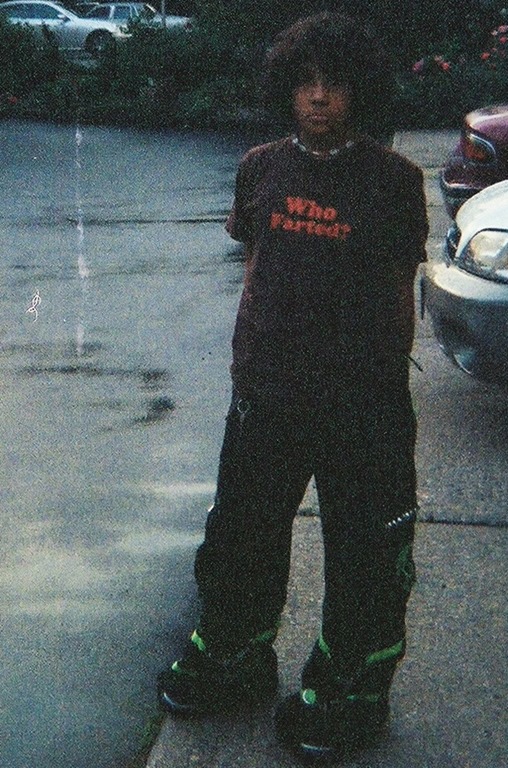
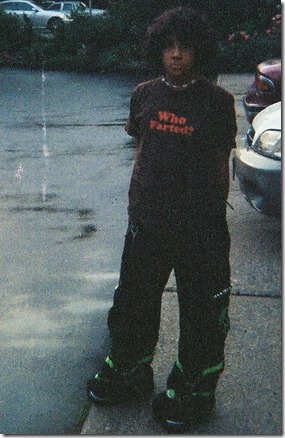
JD and chainy pants

The term “identity crisis” was coined by Erik Erikson and refers to that miserable trap between youth and adulthood.  It’s when we struggle with parents, puberty, and peer pressure to figure out who we are, where we are going and, for me at least, why on earth am I here?

It’s those teenage years fraught with the struggle of becoming an adult.  Trying to find our voice (how we express ourselves) and our place (where we belong and with whom); to make decisions for ourselves.  It’s wanting to be responsible, not having a clue about life, yet feeling so sure and confused at the same time.

Isn’t it the strangest thing that each new generation can find the one mode of self-expression to annoy and perplex the previous one?

When I hear today’s popular music, I find myself thinking the very same thing that my parents’ generation thought about Rock and Roll. “That’s music? It just sounds like noise.”

I remember sneaking torn bellbottoms in my bag to high school and changing into them there because my mom wouldn’t let me leave the house if she saw me in them.  Today, I find myself thinking, “Look at how those kids are dressed! Why would anyone want to dress like that!  Does their mother know they dressed that way?”

Not long ago I thought, “I’m hip. I embrace new music, new dress and hair styles.” But , somehow in this last decade or so, I lost touch. I got old!

But at least I can be accepting.  When my husband’s two youngest kids moved in with us, my 13-year-old stepson had blue hair and wore chains and spikes and my 15-year-old stepdaughter had a banana yellow Mohawk, that turned hot pink (along with the bathroom) within days.  Rather than freak out and make them dye their hair back, as I think my husband wanted to do, I suggested that we say nothing.  If the worst expression of their identity crises was pink and blue hair, I figured it wasn’t too bad.

cesi1

For me, self-expression and parental approval were major problems but I think I felt the crisis the most when I was in college, trying to choose a major, understand sex and love, and (looking back, I realize now) fighting a pretty bad depressive episode.  I wanted to be an artist, but passed up opportunities to apply to art schools, doubting my talent without family support. 

I was lucky to get into a good university with a strong academic program, but the focus was on students taking in information, not expressing it creatively.  I was miserable.  I felt the weight of picking a major.  I didn’t feel old enough or like I knew enough to make that seemingly monumental decision.  I wasn’t very good at learning yet, didn’t feel very smart and felt I was wasting the education I should have been receiving. 

And, all of my relationships were awful.  I wanted to leave home, travel around the country, and support myself as a waitress to get by.  I figured that somewhere along the way I find out what I’m good at and would enjoy and then be more prepared to go to school.  But people scared me into thinking I’d never come back and finish college.  So I stuck it out and graduated; but then I floundered for years not feeling smart or talented, not assertive enough for the jobs I was interested in and over-qualified and too intelligent for the jobs (and relationships for that matter) that I was getting.

Jump ahead about 30 years:  My stepdaughter, bright and mature now with normal colored hair, graduated high school, and had a college lined up that she was excited about.  Then, at the last minute she balked and took a year to travel around the country to work, support herself, and then figure out what she wants to do.  Today she’s a Corporal in the US Marine Corp and has a million options and opportunities available to her.  And my stepson?  He graduated high school with honors in art and was courted with offers and scholarships from art colleges, but he, too, has decided to take some time off from school and is considering the Navy to build skills and serve while earning a living, gaining independence and maturity, and giving his mind time to open more before committing to loans, more academics, and an uncertain career path. 

I’m so proud of both of them and believe that they’ve learned from me that education is important, but not at the cost of their development and aspirations.  There are many ways to get a good education and even more ways to prepare to receive it.  I’m so glad that they were able to make pretty good use of the pink and blue hair, i.e, they expressed themselves and are making the most of the many opportunities available to them while they’re young.

Even though the identity crisis takes place during adolescence, it has felt to me like I’ve been in constant state of identity crisis that is culminating in this mid-life crisis, which may be just as important.  At least it’s not as intense or dramatic!
Pot of Gold

ski download Spring 2012 129

A theorist named Levinson, who studies developmental transitions in men’s lives said that with middle age comes a shift in perspective from thinking about life in terms of time past since birth to thinking about life in terms of time left until death.

Although he was talking about life stages in men, I have been struck by this shift in perspective in myself.

Other researchers have “found that adults who are concerned about providing for future generations tend to be more satisfied with their lives and to view life optimistically – believing that even bad events will eventually have a happy outcome.”

Up until recently I reflected a lot on times past:  where I’ve been, where I’ve come from, and what I’ve learned.  Perhaps this is what we do while we are trying to reach our career and life goals.  But having reached a level of success in my work and personal life, my focus has certainly shifted.

More than ever I’m aware of a feeling that time’s running out.  The myriad of options that lay ahead of me before are narrowing.  If I’m going to write that book, launch that great idea, or do that next big thing, it needs to be soon.

Anyone else feel that pressure?  What do you do about it?

Mental illness and violence

Christopher Gordon, a psychiatrist from Harvard, wrote an excellent letter to the editor of the New York Times inviting a discussion on the issue of forcing people into treatment.  He says,

Recent tragic events have linked mental illness and violence. Some people — I, for one — consider this link dangerously stigmatizing. People with mental illness are far more likely to be victims of violence than perpetrators.

He goes on to say that it’s very difficult to reliably predict whether a person will become violent but tragic events like the ones in Newtown or Virginia Tech increase the pressure placed on psychiatrists (and all mental healthcare workers, I need to add) to do just that.

This means that potentially violent people would need to be identified and, if they are not willing to comply with treatment recommendations, could be mandated to undergo at least medication therapy with antipsychotic drugs.

The problem, Dr. Gordon explains, is that we’ll get better results if the patient agrees to and cooperates with the treatment plan.

Still, if psychiatrists humbly try to understand the person on his or her own terms, do not dismiss the person’s experience as meaningless and truly respect the person’s choices about treatment, sometimes this opens the way to an effective treatment relationship. For some suffering and alienated people — certainly not all — feeling respectfully understood can be a critical step toward recovery.

In my experience, “feeling respectfully understood” is the primary step for healing. It’s woven into my work everyday, every session, with people with serious mental illness.  I don’t think I would be a useful therapist without believing in the inherent goodness of and realistic possibilities for each person I see.  How can marginalized, traumatized, stigmatized people overcome their obstacles to health in therapy with me if I don’t believe that even bad events can lead to good outcomes?

If I don’t take the time to really understand them, how can they trust me?  How can I learn what gets in their way and help them navigate around or through those issues so they can live some semblance of a life “in the community”?

But isn’t it strange that this has to be said? Isn’t it what we all want from our doctors or caretakers…for them to take the time to listen to our concerns and be respectful about it?

Silver lining

Not long ago I taught “Introduction to Psychology” to college undergraduates.  I had been looking forward to teaching the developmental psychology section of the course because I had enjoyed it, along with social and abnormal psychology when I had taken the class 30 years before.  But on reviewing the subject and what we know today, I started to find it quite depressing.  Here’s a quote from the text I used:

“By your early 20s, it’s unlikely that you will grow taller and your weight has typically stabilized for many years to come.  For the next several decades, changes in your body should be relatively minor.  True, you may come to need bifocals, and your hair may begin to gray or to thin.  But the basic bodily systems continue to function well.  However, after age 50 or so, noticeable changes in the body begin to occur.”

So true!  I was looking at pictures of me the other day and was surprised to see that I looked essentially the same from the time I graduated high school until I was in my early 40s, when got married.  But something has happened since then that surprises me every time I notice it.  I’m aging!  I see changes in my face and in my body.  I’ve lost weight.  The extra weight I had in my 30s doesn’t look healthy anymore, but losing it shows the lines more.

My hair is a lot thinner than it used to be, but I rationalize that by acknowledging that it was way too thick before and now it’s at least manageable.  And those grays?   Well, mostly I’m proud of them; but I’m always a little shocked when I notice they’ve spread or when I find them in unexpected places.

Here’s another quote, a little further down.

“Cognitive abilities remain stable through most of adulthood, but signs of decline in some abilities begin to appear by age 50.”

This is a tough one because the idea of my mental capacities declining, really scares me.  My mom has Alzheimer’s Disease and every cognitive glitch I stumble through feels like foreshadowing of things to come.

Here’s another:

“After age 50 or so, people have increased difficulty hearing high-frequency sounds … and the sense of smell does decline after the middle 50s.”

Thankfully I haven’t noticed any major changes here.

So what’s the good news? 

Wisdom.  The knowledge that comes from our years of experience, and our ability to reason, increase with age.  We make better use of strategies as we get older, so we’re more efficient.  Our emotions tend to be more stable.  We enjoy longer periods of positive emotions and enduring spells of negative emotions decrease over time.  And we’re better able to regulate or manage those emotions when we feel them, than when we were younger.

The rest of the news is mixed, but leaves room for hope:

“Aging has two aspects:  changes that are programed into the genes and changes that arise from environmental events.  Many changes that come with aging arise not from inevitable processes, but rather from lack of adequate nutrition (such as fragile bones that result from osteoporosis-related calcium deficiency), lack of exercise (resulting in obesity in some elderly people and frailty in others, or just plain sluggishness and poor health), or lack of meaningful activities (which can lead to feelings of helplessness or apathy).”

We can’t change what’s in our genes (yet) but there are things we can do to improve our chances of aging well.

Musings from Midlife

ski download Spring 2012 009

At this midpoint in life (or so it seems these days), that is, age 50, I’m compelled to make note of some of the fascinating observations about life that I’ve made.  I grew up with roots in two cultures, no religious indoctrination, and a curiosity about people and life that has been insatiable.  I wanted to expose myself to many more diverse experiences than my parents and, later, my budget allowed.  It is probably not surprising that I became a psychologist.  I have been blessed to meet and work with some of the most interesting yet marginalized people in our society.

While I’m aware that my vantage point may not be typical, my hope is that, at the least, these thoughts will be mildly amusing; at best, they’ll be interesting and thought-provoking; and optimally, useful or helpful to one who reads them.

One of my patients is a young man in his late late 20s with schizophrenia, who is isolated, living at home with his mom and really needs to move to a setting where he can have opportunities to interact with others and become more autonomous.  He’s been dragging his feet on this for years.  In part this is because he’s not always articulate, coherent or fully-functional.  But I’ve figured it’s also because he and his mom have a complicated relationship; even though I know she really loves him and wants to see him settled so she’ll know he’ll be all right when she’s gone.

In session not long ago, while hunched over looking at his shoes, he considered the idea of moving to his own place, he said with perfect clarity: “I just don’t want to get old.”

Wow, who does!?

But finally, I had a better idea about what was happening.  For him, moving out meant growing up and staying home kept him young.  I said, “You know that staying at home won’t stop you from getting older.  And it’s true that moving out means having a lot more responsibility, which IS part of getting growing up and getting older.  — But  do you want to hear the good news? – [now I had his attention – eye contact]  Getting older doesn’t have to mean you feel old.  You know what?  Inside, I still feel like I did when I was 19.”

He looked surprised and smiled.  “I still feel 19, too.”

Since then the beautiful mysterious truth of my words keep ringing back to me.  Besides a myriad of experiences I’ve gone through since then, inside I’m no different than I was 30 years ago.  So what has changed?

Well, of course, I really am 30 years older and besides some unpleasant, but not altogether unexpected, physical changes, has also come a shift in perspective.  I could get seasick thinking of the highest highs and lowest lows life has to offer, and the tragic tumble it can become at any moment.  The fearless thrill-seeking bravado I see in my step-kids and younger patients, I no longer possess.  I feel the weight of some of my choices.  It’s a sense of “been there, done that,” but also a nostalgia for things past, opportunities missed and youth lost.  Like most people I studied, worked, made stupid mistakes, and struggled for years; trying to establish a career, find love, and make a family and home.  And now that I’ve been so fortunate to have gotten my groove down for the most part, I find myself wondering, “Ok, now what?”

While the thrill-seeking bravado seems to be gone, I’ve gained a new confidence in myself and things I’ve learned.  I need to be creative and give back in a new way.   That is, I feel a need to figure out a way to take the sum being of me and somehow give of myself with greater confidence and wiser investment than when I was younger.  At the same time I find myself fighting the urge to isolate, be self-absorbed, and do mindless things.

I believe this is what psychoanalyst/ developmental psychologist Erik Erikson meant when he talked about the mid-life crisis as a conflict between generativity and stagnation.  (He was the one that coined the term “identity crisis”.)  Because, after reaching this point I know a lot and have a lot to offer and I can either care by sharing or isolate, think only of myself, and hoard the fruits of my investment and labor.

I have to admit I feel guilty about the fact that my patient has since agreed to start the moving process.  Too bad staying home doesn’t keep us young.

Since then I’ve assumed that feeling 19 (or so) inside is everyone’s experience.  Is it yours?